
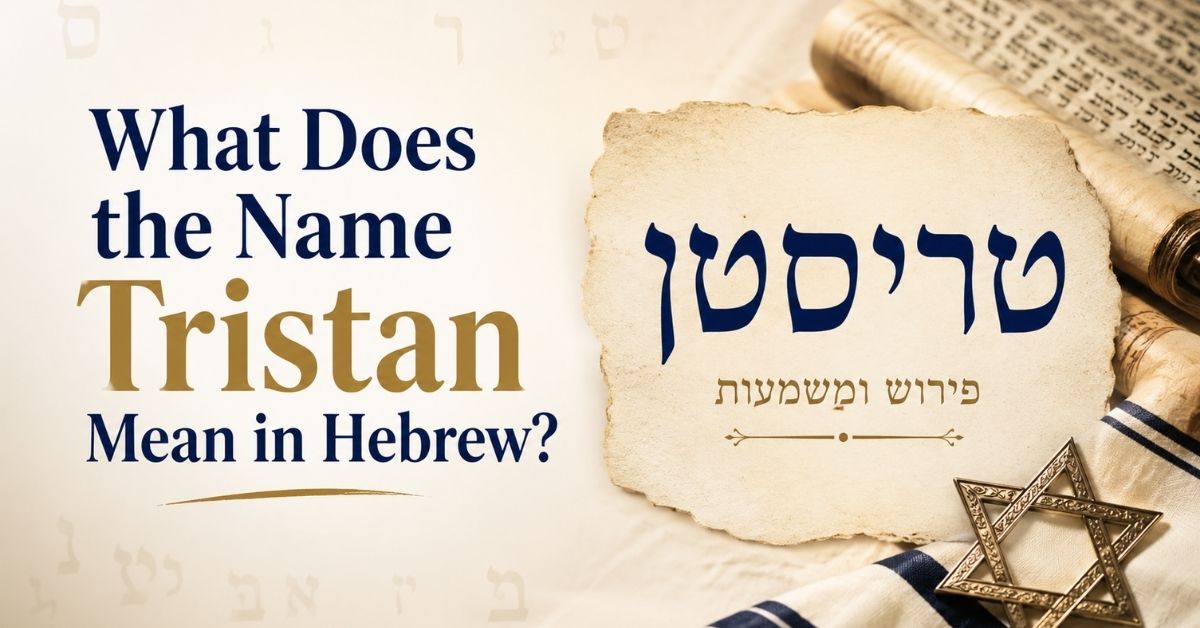
Parents searching for a name with spiritual depth often ask: what does Tristan mean in Hebrew? The honest answer is that Tristan is not a Hebrew name. It comes from Celtic and Latin roots. However, many Christian parents still connect the name to biblical themes through its sound, symbolism, and character associations.
This article breaks down the real etymology of Tristan, its spiritual meaning, and how it fits into a biblical worldview. You’ll get accurate, well-researched information, not guesswork.
Origin and Etymology of Tristan
Tristan’s roots trace back to two main sources.
- Pictish or Celtic origin: The name likely derives from “Drystan,” a Pictish name found in early Arthurian legend.
- Latin influence: Many scholars link Tristan to the Latin word tristis, meaning sorrowful or sad.
The name became famous through the medieval legend of Tristan and Isolde, a tragic romance popular in French and British literature.
- Tristan is not found in the Hebrew Bible (Tanakh).
- It has no direct Hebrew root or Hebrew spelling in ancient texts.
- Its widespread use today comes from European literary tradition, not Scripture.
Understanding this origin matters. It helps set realistic expectations before exploring any biblical or spiritual meaning attached to the name.
See Also: Bible Verses About The Ocean
Tristan in Hebrew Within a Biblical context
Since Tristan has no native Hebrew form, there is no verified transliteration in the Hebrew Bible. Some naming sites attempt a phonetic Hebrew rendering, but this is not linguistically authentic.
Here’s what is accurate:
| Aspect | Fact |
| Hebrew root | None found |
| Appears in Tanakh | No |
| Closest concept | Themes of sorrow turned to joy |
| Common Hebrew-style attempt | Not standardized or verified |
Some Christian parents draw meaning not from the word itself, but from a biblical theme connected to the Latin root “sorrow.” Scripture speaks often about sorrow being transformed into joy.
This is a thematic connection, not a linguistic one. It’s important to be clear about that distinction for accuracy and trust.
Biblical Significance and Spiritual Insights
While Tristan is not a scriptural name, its meaning of “sorrow” resonates with a major biblical theme: God turning mourning into gladness.
This idea appears throughout both the Old and New Testaments. Many faith-based parents find comfort in naming a child Tristan while trusting God to bring joy out of any hardship connected to that name.
Key spiritual insights include:
- Sorrow is never the end of the story in biblical narrative.
- God is described repeatedly as near to the brokenhearted.
- Names tied to sorrow often carry a redemptive arc in Scripture, similar to how Naomi’s story unfolds in the Book of Ruth.
This makes Tristan meaningful in a spiritual sense, even without direct Hebrew origin.
Bible Verses That Reflect Tristan’s Meaning
Several Bible verses reflect the emotional and spiritual themes connected to Tristan’s root meaning of sorrow.
- Psalm 30:5 speaks of weeping lasting for a night, but joy coming in the morning.
- Isaiah 61:3 describes beauty given for ashes, and gladness instead of mourning.
- John 16:20 promises that sorrow will turn into joy.
- Psalm 34:18 affirms that God is close to the brokenhearted.
- Revelation 21:4 describes a future where God wipes away every tear.
These verses don’t mention Tristan directly. They connect thematically to the root meaning of the name.
Parents who choose Tristan for spiritual reasons often lean on these passages as a source of hope and encouragement.
Spiritual Symbolism of Tristan
Beyond direct scripture, Tristan carries symbolic weight in Christian thought.
- Resilience: A name rooted in sorrow can symbolize strength through hardship.
- Transformation: Sorrow turning to joy is a core biblical pattern.
- Compassion: Those familiar with sorrow often grow into empathetic, caring individuals.
Many parents interpret the name as a reminder that difficult beginnings can lead to a purposeful life.
This symbolic reading isn’t found in ancient Hebrew texts. It’s a modern spiritual interpretation many Christian families find meaningful.
Tristan as a Christian Name
Tristan is widely used among Christian families today, even without biblical origin. Its popularity, sound, and emotional depth make it a common modern choice.
Is It a Good Christian Name?
Yes, Tristan can be a good Christian name.
- It is not tied to pagan deities or occult symbolism.
- Its literary root (sorrow) pairs well with Christian themes of redemption.
- It’s widely accepted across Catholic, Protestant, and Orthodox communities.
Some parents pair Tristan with a Hebrew or biblical middle name to add scriptural weight, such as Tristan Elijah or Tristan Micah.
Spiritual Symbolism of the Name Tristan
In Christian symbolism, Tristan is often associated with:
- Overcoming adversity through faith
- A journey from grief to grace
- Quiet strength and inner resolve
These associations align well with common Christian teaching about trials producing character, as described in James 1:2 to 4.
Famous People Named Tristan
Several notable figures carry the name Tristan, which has helped its modern popularity.
- Tristan Thompson, professional basketball player.
- Tristan da Cunha, a remote island named after a Portuguese explorer, though this refers to a place, not a person naming trend.
- Tristan from Arthurian legend, the most historically influential bearer of the name.
These examples show the name’s range across sports, culture, and literature.
Tristan in Legends vs Christian Truth
Tristan’s most famous association is not biblical. It’s literary, rooted in medieval romance.
In the legend:
- Tristan is a knight who falls into a tragic, forbidden love with Isolde.
- Their story ends in sorrow, betrayal, and death.
- The tale is built around fate, magic potions, and doomed romance.
But in Christian truth:
- Love in Scripture is rooted in faithfulness, not fate or magic.
- Sorrow is never final. It’s part of a redemptive process.
- Biblical figures who suffered, like Joseph or David, ultimately experienced restoration.
This contrast matters. Christian parents choosing the name often intentionally separate it from the legend’s tragic ending and instead root it in biblical hope.
Personality Traits Associated with Tristan
Names often carry cultural personality associations, even without linguistic proof. Tristan is commonly linked with these traits:
- Thoughtful: Reflective and introspective by nature.
- Loyal: Deeply committed to relationships and values.
- Resilient: Able to grow through difficulty rather than be defined by it.
- Creative: Drawn to art, storytelling, and expression.
- Empathetic: Sensitive to others’ emotions and struggles.
These traits are based on cultural pattern and naming psychology, not scientific or biblical fact. They’re worth noting for parents curious about a name’s perceived character.
Similar Names and Variations
If you like Tristan but want options with clearer Hebrew or biblical roots, consider these alternatives.
| Name | Origin | Meaning |
| Tristen | Variant spelling | Same root as Tristan |
| Tristian | Variant spelling | Same root as Tristan |
| Drystan | Original Pictish form | Root of Tristan |
| Elias | Hebrew | My God is the Lord |
| Asher | Hebrew | Happy, blessed |
| Josiah | Hebrew | The Lord supports |
| Gideon | Hebrew | Mighty warrior |
Pairing Tristan as a first name with a Hebrew middle name is a popular way to blend literary appeal with biblical grounding.
How to Use Tristan in a Biblical or Spiritual Context
Parents and believers can meaningfully incorporate Tristan into a spiritual life without claiming false Hebrew origin.
- Dedicate the name in prayer. Ask for God’s redemptive purpose over any sorrow tied to the name’s root meaning.
- Pair it with Scripture. Choose a life verse, such as Psalm 30:5, to anchor the name’s meaning in hope.
- Add a Hebrew middle name. This gives the child a direct biblical connection alongside Tristan.
- Teach the story with context. Share both the legend and the Christian reinterpretation so children understand the full picture.
This approach respects historical accuracy while still allowing spiritual depth.
FAQ’s
Is Tristan a Hebrew name?
No, Tristan is not a Hebrew name. It originates from Celtic and Latin roots.
What does Tristan mean in the Bible?
Tristan does not appear in the Bible. Its root meaning, sorrow, connects thematically to biblical stories of grief turning to joy.
Is Tristan a good name for a Christian boy?
Yes, many Christian families use Tristan since it carries no pagan or occult meaning and pairs well with redemptive themes.
What is the literal meaning of Tristan?
Tristan is generally understood to mean sorrowful or sad, from the Latin word tristis.
Does Tristan have a Hebrew equivalent?
There is no verified or standardized Hebrew equivalent for Tristan in traditional texts.
Why is Tristan associated with sorrow and joy in Christian circles?
Because its root meaning, sorrow, mirrors the biblical pattern where God turns mourning into gladness.
What Bible verse pairs well with the name Tristan?
Psalm 30:5 is often used, since it speaks of weeping turning into joy.
Conclusion
Tristan is not a Hebrew or biblical name in the traditional sense. Its true roots are Celtic and Latin, tied to the word for sorrow.
Still, many Christian parents find meaningful ways to connect Tristan to Scripture through theme, symbolism, and paired biblical middle names.
If you’re choosing Tristan for your child, you can confidently root its deeper meaning in biblical hope, trusting that sorrow is never the final chapter in a life shaped by faith.

Charles Turner is the founder and administrator of this prayersglow.com, dedicated to sharing inspiring blessings, meaningful quotes, heartfelt prayers, and Bible-based content. His mission is to encourage faith, hope, and daily spiritual growth by providing uplifting resources that inspire and strengthen readers around the world.